Towns and Trams: Learning from the French
In this guest blog from transport expert Thomas Ableman, he explains what happened when a group of transport and housing aficionados took British policymakers to France to see first hand the country’s fast growing tram network.

France builds 300,000 homes every year. If that number sounds familiar, it’s because that’s the target that the UK misses year after year.
So far this century, a new tramway has opened in France every six months.
Is this a coincidence, or are they linked?
Campaign for Better Transport, Create Streets and I took a group of British politicians and civil servants to France to try to answer that question. The group included an MP, a London Assembly Member, Keir Starmer’s transport adviser and the civil servants leading on New Towns.
Create Streets did a brilliant job finding the sites. My job was to write the report. But I didn’t want this just to become another piece of transport tourism: a polished account of nice streets, elegant trams and attractive apartment blocks (all of which we found!), followed by an implicit shrug about why none of it could ever happen here.
What interested me more was what the policymakers themselves would make of it.
So I interviewed them before we left, during the trip and again at the end. What did they expect? What surprised them? What changed their minds? In a sense, I wanted the report to let the reader have the experience of going on the trip without the cost and hassle of actually going to France.
What we saw was striking. In all three places we visited, the tram was part of a wider system with housing, road layout, public realm, density and transport all making sense together. Surface parking was minimised. Streets were designed as places, not just corridors for vehicle movement. Homes were built at a density high enough to support local shops, public transport and a decent urban life without tipping into tower-block territory.
Just as important was what sat behind it. The trip crystallised for the group that France’s success relies on a set of structural conditions that Britain largely lacks.
Dedicated and hypothecated transport funding was absolutely key. This enabled the decoupling of transport investment from specific housing schemes. In the UK, the transport depends on the housing and the housing depends on the transport. This interdependency creates complexity which makes it hard to get anything done.
The Mayors we met had strong local powers over land, roads and design, so could just get on and do things.
We also saw standardised and (much!) lower-cost tram scheme delivery, combined with the deliberate design of road space to favour walking, cycling and public transport while avoiding the default of on-street parking.
None of this means you can simply copy and paste the French model into Britain. France is not Britain. Its institutions are different, its mayors are more powerful and its state is more comfortable acting directly.
But that was, in some ways, the most useful thing about the trip. It made the barriers clearer and showed that the problem is not that this kind of development is physically impossible or politically unimaginable, it is that our system is not currently set up to make it easy.
That is a much more useful conclusion than either blind optimism or instant dismissal.
The full report, Towns and Trams: Learning from the French, follows the policymakers through that journey: what they expected, what they saw and what they concluded Britain would need to change if we are serious about building at the scale we keep promising. Are we ready?
Read Towns and Trams: Learning from the French, written by Thomas Ableman, produced by Campaign for Better Transport and Create Streets and funded by the RAC Foundation.
You can find out more about Thomas’s work on his website freewheeling.info.
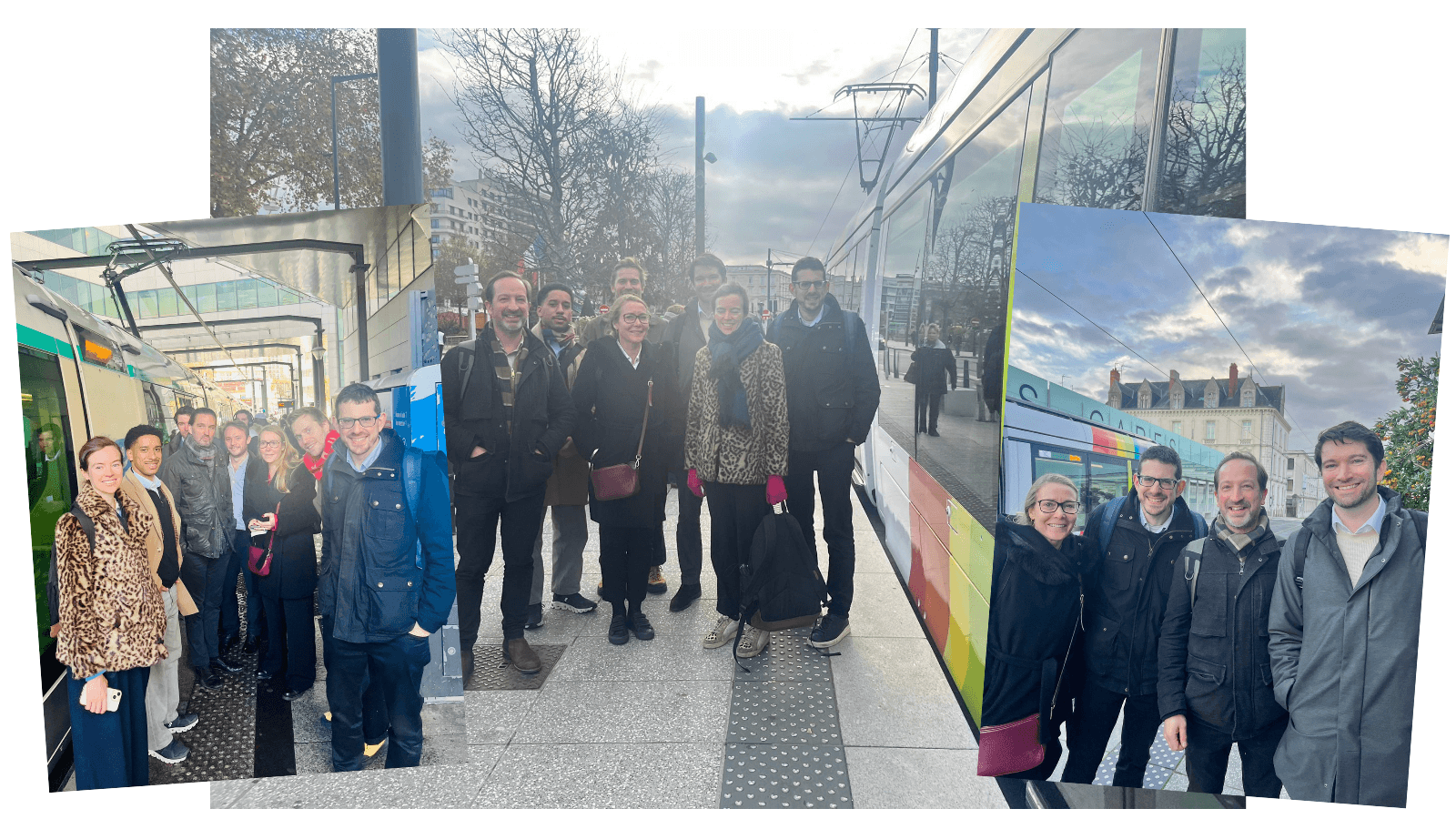
The group in France


